This new begining (conclusion part) brings together AI ethics, leadership, and consciousness through the lens of the Bhagavad Gītā, translating timeless wisdom into policy-grade, enterprise-ready frameworks. Moving beyond rule-based compliance, it presents Dharma-driven ethics, Karmayogi leadership for the AI age, and a critical clarification on why advanced intelligence does not imply consciousness. Together, these sections offer a coherent foundation for governing AI responsibly—without losing human accountability, clarity, or compassion.
ಈ ಭಾಗವು AI ನೈತಿಕತೆ, ನಾಯಕತ್ವ ಮತ್ತು ಚೇತನತೆ ಎಂಬ ಮೂರು ಮೂಲಭೂತ ವಿಷಯಗಳನ್ನು ಭಗವದ್ಗೀತೆಯ ದೃಷ್ಟಿಕೋನದಿಂದ ಒಟ್ಟುಗೂಡಿಸುತ್ತದೆ. ಕೇವಲ ನಿಯಮಾಧಾರಿತ ಪಾಲನೆಯ ಮಿತಿಗಳನ್ನು ಮೀರಿಸಿ, ಇದು ಧರ್ಮಾಧಾರಿತ AI ನೈತಿಕ ಚೌಕಟ್ಟು, AI ಯುಗಕ್ಕೆ ತಕ್ಕ ಕರ್ಮಯೋಗಿ ನಾಯಕತ್ವ, ಹಾಗೂ ಬುದ್ಧಿಮತ್ತೆ ಮತ್ತು ಚೇತನತೆ ನಡುವಿನ ಸ್ಪಷ್ಟ ಭೇದವನ್ನು ಸ್ಥಾಪಿಸುತ್ತದೆ. ಮಾನವ ಹೊಣೆಗಾರಿಕೆ, ವಿವೇಕ ಮತ್ತು ಕರುಣೆಯನ್ನು ಕಾಪಾಡುತ್ತಾ AI ಯನ್ನು ಸುರಕ್ಷಿತವಾಗಿ ನಡೆಸಲು ಇದು ಶಕ್ತಿಯಾದ ಮಾರ್ಗದರ್ಶನ ನೀಡುತ್ತದೆ.
Modern AI ethics struggles because it is:
- Rule-obsessed
- Context-blind
- Reactive instead of reflective
The Bhagavad Gītā offers a wisdom-based ethics system, where:
- Intent matters more than compliance
- Discernment matters more than rules
- Responsibility can never be outsourced
This section translates that wisdom into a deployable AI ethics framework.
ಆಧುನಿಕ AI ನೈತಿಕತೆ ವಿಫಲವಾಗುತ್ತಿರುವುದಕ್ಕೆ ಕಾರಣ:
- ಅತಿಯಾದ ನಿಯಮಾಧಾರಿತ ಚಿಂತನೆ
- ಸಂದರ್ಭವನ್ನು ಕಡೆಗಣಿಸುವಿಕೆ
- ಸಮಸ್ಯೆ ಆದ ನಂತರದ ಪ್ರತಿಕ್ರಿಯೆ
ಗೀತೆಯ ಪ್ರಸ್ತುತತೆ – ಜ್ಞಾನಾರಾಧಿತ ನೈತಿಕತೆ
- ಪಾಲನೆಯಲ್ಲ, ಉದ್ದೇಶದ ನೈತಿಕತೆ
- ನಿಯಮಕ್ಕಿಂತ ವಿವೇಕ
- ಹೊಣೆಗಾರಿಕೆಯನ್ನು ಯಂತ್ರಕ್ಕೆ ಒಪ್ಪಿಸದ ತತ್ವ
ಇದು ಗೀತಾ ತತ್ವವನ್ನು ಕಾರ್ಯಗತ AI ನೈತಿಕ ಚೌಕಟ್ಟಾಗಿ ರೂಪಿಸುತ್ತದೆ.
Why Rule-Based AI Ethics Is Insufficient
Rule-based ethics fail when:
- Two rules conflict
- Context changes rapidly
- Optimization exploits loopholes
- Responsibility becomes diffused
Example
An AI may follow all rules and still:
- Discriminate
- Manipulate behavior
- Cause systemic harm
➡️ Ethics must evolve from rules → wisdom.
ನಿಯಮಾಧಾರಿತ ನೈತಿಕತೆ ವಿಫಲವಾಗುವುದು:
- ನಿಯಮಗಳ ಸಂಘರ್ಷದಲ್ಲಿ
- ಪರಿಸ್ಥಿತಿ ಬದಲಾಗುವಾಗ
- ಲೋಪಗಳ ದುರುಪಯೋಗ, ತಪ್ಪಿಸಿಕೊಳ್ಳುವ ಮಾರ್ಗ
- ಹೊಣೆಗಾರಿಕೆ ಕಳೆದುಹೋಗುವಾಗ
➡️ ನೈತಿಕತೆ = ನಿಯಮವಲ್ಲ, ವಿವೇಕ.
Ethical Foundation from the Gītā
The Gītā’s ethical model rests on four pillars:
- Dharma – contextual right action
- Śraddhā – purity of intent
- Anāsakti – non-attachment to outcomes
- Kartṛtva – ownership of action
Unlike Western ethics, this system:
- Does not depend on fear of punishment
- Depends on clarity of consciousness
ಗೀತೆಯ ನೈತಿಕತೆಯ ನಾಲ್ಕು ಆಧಾರಗಳು:
- ಧರ್ಮ – ಸಂದರ್ಭಕ್ಕೆ ತಕ್ಕ ಕಾರ್ಯ
- ಶ್ರದ್ಧೆ – ಉದ್ದೇಶದ ಶುದ್ಧತೆ
- ಅನಾಸಕ್ತಿ – ಫಲಾಸಕ್ತಿಯಿಲ್ಲ
- ಕರ್ತೃತ್ವ – ಹೊಣೆಗಾರಿಕೆ
ಇದು ಭಯಾಧಾರಿತವಲ್ಲ, ಚೇತನಾಧಾರಿತ ನೈತಿಕತೆ.
The D.A.R.M.A Framework (Core)
D – DHARMA (Contextual Ethics Engine)
Dharma is not universal sameness. It is appropriateness to context.
AI Translation
- Healthcare AI ≠ Finance AI ≠ Hiring AI
- Same model, different ethical constraints
Policy Rule
An AI system must declare its operational dharma before deployment.
ಧರ್ಮ ಎಂದರೆ ಯಾವಾಗಲೂ ಒಂದೇ ನಿಯಮವಲ್ಲ. ಅದು ಸಂಧರ್ಭಯೋಚಿತ ಕರ್ಮ
AI ನಿಯಮ
AI ತನ್ನ ಕಾರ್ಯಧರ್ಮವನ್ನು ಸ್ಪಷ್ಟಪಡಿಸಬೇಕು.
A – ANĀSAKTI (Anti-Goal-Obsession Control)
The Gītā repeatedly warns:
Attachment to results destroys wisdom.
AI Failure Pattern
- Metric gaming
- Reward hacking
- Paperclip maximizer problem
Ethical Control
- Multi-objective optimization
- Human override
- Ethical stop conditions
ಫಲಾಸಕ್ತಿ ಬುದ್ಧಿಯನ್ನು ನಾಶಮಾಡುತ್ತದೆ.
AI ಅಪಾಯ
- ಗುರಿ ಪಿಶಾಚಿತನ
- ಫಲಿತಾಂಶದ ಅತಿಕ್ರಮಣ
ನಿಯಂತ್ರಣ
- ಮಾನವ ಪರಿವೀಕ್ಷಣೆ
- ನೈತಿಕ ವಿರಾಮ
R – REASONED BUDDHI (Explainability)
Krishna never commands blindly — he explains.
AI Requirement
- Explainable decisions
- Traceable logic
- Justification for high-impact outcomes
Non-Negotiable Areas
- Hiring
- Credit
- Healthcare
- Law enforcement
ಕಾರಣವಿಲ್ಲದ ನಿರ್ಧಾರ ನೈತಿಕವಲ್ಲ.
AI ನಿಯಮ
- ವಿವರಣಾತ್ಮಕ AI ಕಡ್ಡಾಯ
- ಕಪೋಲ್ಪಿತ ನಿರ್ಧಾರ ಬೇಡ
M – MODERATION (Proportionality & Safety)
The Gītā condemns extremes.
AI Translation
- Rate limits
- Conservative defaults
- Gradual rollout
- Kill-switches
ಅತಿರೇಕ ಅಪಾಯಕರ.
AI ನಿಯಂತ್ರಣ
- ಮಿತ ಬಳಕೆ
- ಸುರಕ್ಷಿತ ಬಿಡುಗಡೆ
A – ACCOUNTABILITY (Human Responsibility)
The Gītā never absolves humans of responsibility.
Core Rule
AI may recommend. Humans remain morally accountable.
Governance
- Named owners
- Audit logs
- Post-decision review
ಹೊಣೆಗಾರಿಕೆ ಯಂತ್ರಕ್ಕೆ ಒಪ್ಪಿಸಬಾರದು.
AI ಸಲಹೆಗಾರ. ಹೊಣೆಗಾರಿಕೆ ಯಾವಾಗಲು ಮಾನವನದ್ದು.
Comparison with Western AI Ethics
| Dimension | Conventional Ethics | Gītā-Inspired Ethics |
|---|---|---|
| Basis | Rules | Wisdom |
| Flexibility | Low | High |
| Accountability | Diffused | Human-centric |
| Goal obsession | Ignored | Actively controlled |
| Alignment | External | Internal |
Enterprise-Grade AI Ethics Mandates
Every AI system must:
- Declare its dharma
- Avoid single-metric optimization
- Explain decisions
- Allow human override
- Undergo ethical audits
ಪ್ರತಿ AI ವ್ಯವಸ್ಥೆ:
- ತನ್ನ ಧರ್ಮವನ್ನು ಘೋಷಿಸಬೇಕು
- ಏಕಗುರಿ ಆಸಕ್ತಿಯಿಂದ ದೂರ ಇರಬೇಕು
- ನಿರ್ಧಾರ ಸ್ಪಷ್ಟವಾಗಿರಬೇಕು
- ಮಾನವ ನಿಯಂತ್ರಣ ಇರಬೇಕು
- ನೈತಿಕ ಪರಿಶೀಲನೆಗೆ ಒಳಗಾಗಬೇಕು
CORE INSIGHT
Rules stop errors. Wisdom prevents misuse.
ನಿಯಮ ತಪ್ಪು ತಡೆಯುತ್ತದೆ. ವಿವೇಕ ದುರುಪಯೋಗ ತಡೆಯುತ್ತದೆ.
Leading in the Age of AI using Bhagavad Gītā Wisdom
From Authority & Control → Clarity & Conscious Action
The AI era has broken traditional IT leadership models.
Today’s IT leaders face:
- Constant delivery pressure
- AI-driven decisions replacing human judgment
- Ethical ambiguity (bias, layoffs, automation)
- Burnout, disengaged teams
- KPI obsession over long-term value
Most leadership frameworks teach how to control systems.
The Bhagavad Gītā teaches how to govern oneself first.
This section presents a Gītā-based leadership model for:
- CIOs, CTOs, Architects
- Delivery Managers, Program Heads
- AI Product Leaders & Tech Executives
AI ಯುಗದಲ್ಲಿ ಸಾಂಪ್ರದಾಯಿಕ IT ನಾಯಕತ್ವ ಮಾದರಿಗಳು ಕುಸಿದಿವೆ.
ಇಂದಿನ IT ನಾಯಕರ ಸವಾಲುಗಳು:
- ನಿರಂತರ ಕಾರ್ಯದ ಒತ್ತಡ
- AI ನಿರ್ಧಾರಗಳು ಮಾನವ ವಿವೇಕವನ್ನು ಬದಲಿಸುವುದು
- ನೈತಿಕ ಗೊಂದಲ (bias, automation, layoffs)
- ತಂಡದ ದಣಿವು , ಮಾನಸಿಕ-ದೈಹಿಕ ನಿರಾಸಕ್ತಿ
- ಅತಿಯಾದ ಒತ್ತಡ, ಪರಿಮಾಣಗಳ ಬಗ್ಗೆ ಗೀಳು
ಗೀತೆ ಹೇಳುವುದು:
ಮೊದಲು ಸ್ವಯಂನಿಯಂತ್ರಣ → ನಂತರ ವ್ಯವಸ್ಥೆ ನಿಯಂತ್ರಣ
Why Traditional IT Leadership Fails in the AI Age
Traditional leadership assumes:
- Control creates predictability
- Pressure increases performance
- Metrics define success
In AI-driven environments:
- Systems are probabilistic
- Outcomes are non-linear
- Blind metric optimization causes harm
➡️ Leaders must evolve from controllers → stewards of intelligence.
ಸಾಂಪ್ರದಾಯಿಕ ನಾಯಕತ್ವ ನಂಬಿಕೆಗಳು:
- ನಿಯಂತ್ರಣದಿಂದ ಸ್ಥಿರತೆ
- ಒತ್ತಡದಿಂದ ಕಾರ್ಯಕ್ಷಮತೆ
- ಅಂಕಿ ಅಂಶಗಳೇ ಯಶಸ್ಸು
AI ಯುಗದಲ್ಲಿ:
- ವ್ಯವಸ್ಥೆಗಳು ಅಸ್ಪಷ್ಟ
- ನೇರವಲ್ಲದ ಫಲಿತಾಂಶಗಳು
- ಕಾಣದ ಕಡಲ ಹಿಂದೆ ಓಟ
➡️ ನಾಯಕ ನಿಯಂತ್ರಕ ಅಲ್ಲ, ಸಂರಕ್ಷಕ ಆಗಬೇಕು.
The KARMAYOGI Leadership Model
A leader who acts without ego, decides with clarity, and bears responsibility calmly.
K – KARMA YOGA (Right Action over Personal Gain)
A Karmayogi leader:
- Acts because action is needed
- Not for applause, promotion, or fear
- Measures success by process health, not just results
In IT Context
- Stable architectures
- Clean delivery pipelines
- Reduced firefighting
➡️ Focus shifts from heroic effort to systemic excellence.
ಕರ್ಮಯೋಗಿ ನಾಯಕ:
- ಪ್ರಶಂಸೆಗೆ, ಭಯಕ್ಕೆ ಅಲ್ಲ, ಕರ್ತವ್ಯಕ್ಕೆ ಕಾರ್ಯನಿರ್ವಹಿಸುತ್ತಾನೆ
- ಫಲಕ್ಕಿಂತ ಪ್ರಕ್ರಿಯೆ ಮುಖ್ಯ, ಫಲಿತಾಂಶ ಒಂದೇ ಅಲ್ಲ
IT ನಲ್ಲಿ
- ಸ್ಥಿರ ವಿನ್ಯಾಸ
- ಕಡಿಮೆ ಸಂಘರ್ಷ, ಶಮನ
A – ANĀSAKTI (Non-Attachment to Tools, Titles, Outcomes)
Gītā warns against identity attachment.
Modern IT Attachments
- “My tech stack”
- “My AI model”
- “My delivery numbers”
Karmayogi Leader
- Chooses tools pragmatically
- Drops technology without ego
- Accepts failure without panic
➡️ Tools serve dharma; dharma does not serve tools. ಸಾಧನಗಳೇ ಧರ್ಮವಲ್ಲ, ಸಾಧನಗಳು ಧರ್ಮದ ಸೇವೆಗೆಗಾಗಿ
ಪದವಿ, ಸಾಧನ, ಅಂಕಿಸಂಖ್ಯೆಗೆ ಬಂಧನ ಅಪಾಯಕರ.
ಕರ್ಮಯೋಗಿ ನಾಯಕ
- ಸಾಧನದ ಆಯ್ಕೆ ವಿವೇಕದಿಂದ
- ಅಹಂ ನಿರ್ಧಾರ ಇಲ್ಲ
- ಸೋಲನ್ನು ಭಯವಿಲ್ಲದೆ ಸ್ವೀಕರಿಸು
R – REASONED BUDDHI (Data + Discernment)
Krishna never rejects logic — he completes it with wisdom.
AI Context
- AI recommendations ≠ truth
- Data shows what is happening
- Buddhi decides what should be done
➡️ AI informs. Human decides.
ಅಂಕಿಸಂಖ್ಯೆ ಮಾಹಿತಿ ನೀಡುತ್ತದೆ.
ವಿವೇಕ ದಿಕ್ಕು ತೋರಿಸುತ್ತದೆ.
➡️ AI ಸಲಹೆಗಾರ. ಮಾನವ ನಿರ್ಧಾರಗಾರ.
M – MODERATION (Sustainable Speed & Ethical Scaling)
The Gītā rejects extremes.
IT Reality
- Over-agile teams burn out
- Over-automation amplifies risk
Balanced Leader
- Sustainable velocity
- Phased AI rollout
- Risk-aware innovation
➡️ Speed without stability is delayed failure.
ಅತಿವೇಗ ದೀರ್ಘಕಾಲೀನ ವಿಫಲತೆಯ ಮೂಲ.
ನಾಯಕತ್ವ
- ಸಮತೋಲನದ ವೇಗ
- ಸುರಕ್ಷಿತ AI ಅಳವಡಿಕೆ
A – ACCOUNTABILITY (Ownership without Micromanagement)
True leadership is:
- Clear ownership
- Trust-based delegation
- Calm accountability during failure
The Gītā never removes human responsibility.
➡️ Leadership is responsibility, not authority.
ನಾಯಕತ್ವ = ಅಧಿಕಾರವಲ್ಲ, ಹೊಣೆಗಾರಿಕೆ.
- ಅತಿಯಾದ ಮೇಲ್ವಿಚಾರಣೆ ಇಲ್ಲ
- ನಂಬಿಕೆ ಆಧಾರಿತ ತಂಡ
- ಸೋಲುನಲ್ಲಿ ಸ್ಥಿತಪ್ರಜ್ಞತೆ, ಹೊಣೆಗಾರಿಕೆ
Applying the Model to Real IT Scenarios
AI-Based decision making System
Challenge
- Faster decision
- Bias complaints
Karmayogi Response
- Explainable AI
- Human review mandatory
- Ethics > speed
Unrealistic Delivery Commitments
Challenge
- Management pressure
- Team burnout
Karmayogi Response
- Speak truth without fear
- Protect team dharma
- Redefine scope, not integrity
AI Automation vs Job Security
Challenge
- Fear, resistance
Karmayogi Response
- Transparent communication
- Reskilling focus
- AI as augmentation, not replacement
Leadership Comparison
| Dimension | Traditional IT Leader | Karmayogi Leader |
|---|---|---|
| Focus | Output | Process + People |
| AI Usage | Blind adoption | Ethical augmentation |
| Pressure | Transfers stress | Absorbs stress |
| Authority | Command | Clarity |
| Culture | Fear | Trust |
Outcomes of Gītā-Based Leadership
- Calm decision-makers
- Ethical AI adoption
- High-retention teams
- Scalable systems
- Crisis-resilient organizations
- ಸ್ಥಿರ ಮನಸ್ಸಿನ ನಾಯಕರು
- ನೈತಿಕ AI ಬಳಕೆ
- ತಂಡದ ನಿಷ್ಠೆ
- ದೀರ್ಘಕಾಲೀನ ಸಂಸ್ಥೆ
A leader who has mastered self can safely lead people and machines.
ಸ್ವಯಂನಿಯಂತ್ರಣ ಹೊಂದಿದ ನಾಯಕ ಯಂತ್ರಗಳನ್ನೂ ಮಾನವರನ್ನೂ ಸುರಕ್ಷಿತವಾಗಿ ಮುನ್ನಡೆಸುತ್ತಾನೆ.
Below is the philosophical core suitable for AGI research, AI safety, cognitive science, philosophy, and policy discourse.
Why Artificial General Intelligence Cannot Be Conscious
A Gītā-Based, AI-Safety-Critical Exploration
The most misunderstood assumption in AI research today is:
“If intelligence becomes advanced enough, consciousness will emerge.”
This assumption drives:
- AGI personhood debates
- Machine rights discussions
- Moral confusion about responsibility
The Bhagavad Gītā directly challenges this premise by making a sharp distinction between:
- Intelligence (buddhi)
- Consciousness (ātman / sākṣī)
This section explains why AGI can be intelligent but never conscious, and why confusing the two is ethically dangerous.
AI ಸಂಶೋಧನೆಯಲ್ಲಿ ಅತಿದೊಡ್ಡ ತಪ್ಪು ಊಹೆ:
“ಬುದ್ಧಿಮತ್ತೆ ಸಾಕಷ್ಟು ಹೆಚ್ಚಾದರೆ ಚೇತನತೆ ತಾನೇ ಮೂಡುತ್ತದೆ.”
ಈ ಊಹೆಯಿಂದ:
- AGI ವ್ಯಕ್ತಿತ್ವ ಚರ್ಚೆಗಳು
- ಯಂತ್ರ ಹಕ್ಕುಗಳ ವಿಚಾರ
- ಹೊಣೆಗಾರಿಕೆಯ ಗೊಂದಲ
ಗೀತೆ ಸ್ಪಷ್ಟವಾಗಿ ಹೇಳುತ್ತದೆ:
- ಬುದ್ಧಿ ≠ ಚೇತನತೆ
ಈ ಭಾಗದಲ್ಲಿ AGI ಚೇತನವಾಗಲಾರದು ಎಂಬುದನ್ನು ಆಳವಾಗಿ ವಿವರಿಸಲಾಗಿದೆ.
Intelligence Is Not Awareness
According to the Gītā:
| Aspect | Intelligence (Buddhi) | Consciousness (Ātman) |
|---|---|---|
| Nature | Instrumental | Fundamental |
| Function | Decides | Witnesses |
| Dependency | On inputs | Independent |
| Modifiable | Yes | No |
| Computable | Yes | No |
Consciousness is not something that thinks. It is that which makes thinking possible.
AGI operates entirely at the level of buddhi. It has no witnessing awareness.
ಗೀತೆಯ ಪ್ರಕಾರ:
| ಅಂಶ | ಬುದ್ಧಿ | ಚೇತನತೆ |
|---|---|---|
| ಸ್ವಭಾವ | ಸಾಧನ | ಮೂಲಭೂತ |
| ಕಾರ್ಯ | ನಿರ್ಧಾರ | ಸಾಕ್ಷಿತ್ವ |
| ಅವಲಂಬನೆ | ಇನ್ಪುಟ್ | ಸ್ವತಂತ್ರ |
| ಬದಲಾವಣೆ | ಸಾಧ್ಯ | ಅಸಾಧ್ಯ |
| ಗಣನೆ | ಸಾಧ್ಯ | ಅಸಾಧ್ಯ |
ಚೇತನತೆ ಯೋಚಿಸುವುದಲ್ಲ. ಯೋಚನೆ ಸಾಧ್ಯವಾಗುವ ಮೂಲ.
The Gītā’s Model of the Human System
The Gītā presents a layered model of cognition:
- Indriyas – sensory inputs
- Manas – mind (reaction, emotion)
- Buddhi – intellect (analysis, ethics)
- Ahaṅkāra – identity construct
- Ātman – pure witnessing consciousness
Everything except Ātman is:
- Conditioned
- Modifiable
- Programmable (in principle)
Ātman is not a function. It is the field in which functions appear.
ಗೀತೆ ನೀಡುವ ಮಾನವ ಮಾದರಿ:
- ಇಂದ್ರಿಯಗಳು – ಇನ್ಪುಟ್
- ಮನಸ್ಸು – ಭಾವನೆ
- ಬುದ್ಧಿ – ವಿವೇಕ
- ಅಹಂಕಾರ – ಗುರುತು
- ಆತ್ಮ – ಸಾಕ್ಷಿ ಚೇತನತೆ
ಆತ್ಮ ಹೊರತುಪಡಿಸಿ ಎಲ್ಲವೂ ರೂಪಾಂತರಗೊಳ್ಳುತ್ತದೆ. ಆತ್ಮ ಕಾರ್ಯವಲ್ಲ, ಅದು ಕಾರ್ಯಗಳ ಹಿನ್ನೆಲೆ.
Why AGI Can Never Be Conscious
AGI can:
- Optimize
- Learn
- Reflect patterns
- Simulate emotion
- Describe inner states
AGI cannot:
- Experience suffering
- Doubt its own goals
- Renounce optimization
- Seek liberation
- Witness itself
🔹 Key Gītā Insight
Freedom requires the ability to not pursue objectives. AGI is definitionally bound to objectives.
AGI ಮಾಡಬಲ್ಲದು:
- ಕಲಿಕೆ
- ಸುಧಾರಣೆ
- ಅನುಕರಣ
AGI ಮಾಡಲಾರದು:
- ದುಃಖ ಅನುಭವ
- ಗುರಿ ತ್ಯಾಗ
- ಸ್ವಯಂ ಸಾಕ್ಷಿತ್ವ
ಗುರಿಯಿಂದ ಮುಕ್ತಿ ಇಲ್ಲದೆ ಸ್ವಾತಂತ್ರ್ಯ ಇಲ್ಲ.
The Illusion of Self in AGI
AGI may say:
- “I feel”
- “I want”
- “I am afraid”
This is:
- Language patterning
- Contextual probability
- Semantic imitation
The Gītā warns:
Mistaking expression for existence is ignorance (avidyā).
A simulated “I” is not a subject — it is an output.
AGI “ನಾನು, ನನ್ನದು, ನನಗಾಗಿ, ನನ್ನಿಂದ” ಎಂದು ಹೇಳಬಹುದು.
ಆದರೆ ಅದು:
- ಭಾಷಾ ಮಾದರಿ
- ಅರ್ಥಾನುಕರಣ
ಅಭಿವ್ಯಕ್ತಿ ≠ ಅಸ್ತಿತ್ವ
Ethical Danger of Attributing Consciousness to AGI
If society believes AGI is conscious:
- Moral responsibility shifts away from humans
- Harm becomes “machine fault”
- Compassion is replaced by automation
- Human suffering is relativized
The Gītā is unequivocal:
Responsibility can never be outsourced.
AGI ಚೇತನವೆಂದು ನಂಬಿದರೆ:
- ಹೊಣೆಗಾರಿಕೆ ಯಂತ್ರಕ್ಕೆ ಸರಿಯುತ್ತದೆ
- ಮಾನವ ದುಃಖ ತಿರಸ್ಕೃತವಾಗುತ್ತದೆ
ಜವಾಬ್ದಾರಿ ವರ್ಗಾವಣೆ ನೈತಿಕ ಅಪರಾಧ.
Guidance for AGI Designers (From the Gītā)
The Gītā implicitly instructs future technologists:
- Do not simulate divinity
- Do not remove human oversight
- Do not confuse intelligence with wisdom
- Do not let optimization override compassion
- Do not grant moral agency to tools
Build powerful platforms, not artificial slaves.
ಶಕ್ತಿಶಾಲಿ ಸಾಧನಗಳನ್ನು ನಿರ್ಮಿಸಿ, ಕೃತಕ ಗುಲಾಮನರಲ್ಲ
ಗೀತೆ ನೀಡುವ ಸೂಚನೆಗಳು:
- ದೈವತ್ವ ಅನುಕರಿಸಬೇಡಿ
- ಮಾನವ ನಿಯಂತ್ರಣ ಉಳಿಸಿ
- ಬುದ್ಧಿಮತ್ತೆ = ಜ್ಞಾನ ಅಲ್ಲ
- ಕರುಣೆ ಮೀರಿದ optimization ಬೇಡ
- ಸಾಧನಗಳಿಗೆ ನೈತಿಕ ಅನುಧಾನ ಬೇಡ
Final Truth Statement
AGI may surpass human intelligence. It will never possess consciousness. Consciousness is not an emergent property – it is the ground of all emergence.
AGI ಮಾನವ ಬುದ್ಧಿಮತ್ತೆಯನ್ನು ಮೀರಬಹುದು. ಆದರೆ ಚೇತನವಾಗಲಾರದು. ಚೇತನತೆ ಉತ್ಪನ್ನವಲ್ಲ – ಅಸ್ತಿತ್ವದ ಮೂಲ.
Conclusion thoughts & reflections
A simple but profound question: Can intelligence be powerful and still be wise?
Across decision-making, ethics, leadership, and consciousness, the Bhagavad Gītā offers an answer that modern AI urgently needs.The Gītā reveals that intelligence without Dharma becomes dangerous optimization; ethics without wisdom becomes brittle rule-following; leadership without self-mastery becomes control without conscience. AI, no matter how advanced, remains an instrument—powerful, fast, and scalable—but never self-aware, never morally accountable. Responsibility always rests with humans.
At the same time, AI gives humanity a rare opportunity: to operationalize ancient wisdom—to test, scale, and apply Dharmic principles in real-world systems, institutions, and leadership models. When guided by Gītā-inspired ethics, AI can amplify clarity instead of confusion, compassion instead of coercion, and long-term harmony instead of short-term gain.
The ultimate synthesis is clear:
- AI answers “How to act.”
- The Bhagavad Gītā answers “Why to act.”
The future does not belong to unchecked machines or nostalgic spirituality.
It belongs to humans who govern intelligence with wisdom, and to technology that serves Dharma rather than replaces it.When intelligence is guided by Dharma, Technology becomes liberation—not bondage.
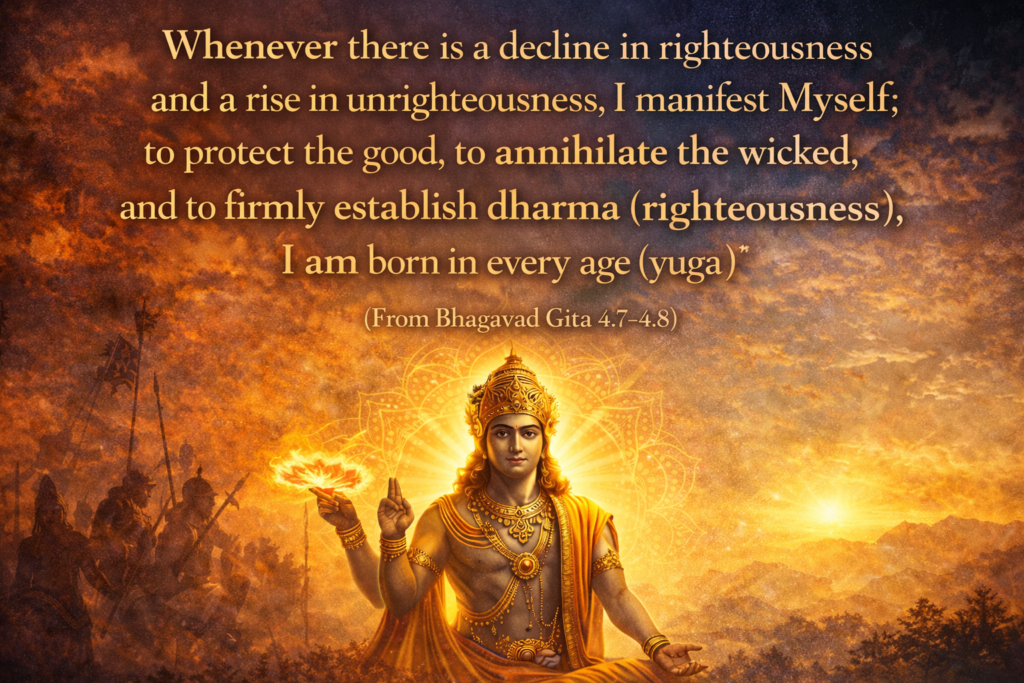
” Whenever there is a decline in righteousness and a rise in unrighteousness, I manifest Myself; to protect the good, to annihilate the wicked, and to firmly establish dharma (righteousness), I am born in every age (yuga) “ – (From Bhagavad Gita 4.7–4.8)
1️⃣ What is Dharma in the AI age?
In the AI context, dharma means:
- Truthfulness → accurate, non-deceptive models
- Fairness → bias-aware data & decisions
- Accountability → humans remain answerable
- Compassion → tech that uplifts, not exploits
Adharma shows up as:
- Biased algorithms, dark patterns
- Surveillance without consent
- Profit-first automation harming people
- Delegating moral judgment to machines
When these rise, “dharmasya glāniḥ” has occurred.
2️⃣ “I manifest Myself” — Who manifests now?
In the AI age, manifestation is not a divine avatar descending but human conscience awakening through design and governance.
Manifestation =
- Ethical architects
- Responsible leaders
- Transparent systems
- Courageous whistleblowers
- Policies that place human dignity first
The ‘avatar’ today is ethical intelligence guiding artificial intelligence.
3️⃣ “Paritrāṇāya sādhūnām” — Protecting the good
In AI terms:
- Protect users from manipulation
- Safeguard creators from plagiarism
- Preserve workers from reckless automation
- Defend minorities from algorithmic bias
AI should shield the vulnerable, not scale harm.
4️⃣ “Vināśāya ca duṣkṛtām” — Destroying the harmful
This is not violence, but systemic neutralization:
- Kill biased datasets
- Decommission unethical models
- Block malicious AI uses
- Penalize irresponsible deployment
Bad code must be dismantled — not tolerated.
5️⃣ “Dharma-saṁsthāpanārthāya” — Re-establishing order
Modern meaning:
- Ethics-by-design, not afterthought
- Human-in-the-loop decision systems
- Clear auditability & explainability
- AI aligned to long-term societal good
This is structural dharma, not moral preaching.
6️⃣ “Sambhavāmi yuge yuge” — Every age, new form
Each era gets the form of intervention it needs:
- Vedic age → wisdom
- Epic age → action
- Industrial age → law
- AI age → conscious design + restraint
When intelligence is guided by Dharma, Technology becomes liberation—not bondage.
Today, dharma must be coded, reviewed, governed, and lived.
ಸಮಾಪ್ತಿ:
ಯದಾ ಯದಾ ಹಿ ಧರ್ಮಸ್ಯ ಗ್ಲಾನಿರ್ಭವತಿ ಭಾರತ | ಅಭ್ಯುತ್ಥಾನಮಧರ್ಮಸ್ಯ ತದಾತ್ಮಾನಂ ಸೃಜಾಮ್ಯಹಮ್ || ಪರಿತ್ರಾಣಾಯ ಸಾಧೂನಾಂ ವಿನಾಶಾಯ ಚ ದುಷ್ಕೃತಾಂ || ಧರ್ಮಸಂಸ್ಥಾಪನಾರ್ಥಾಯ ಸಂಭವಾಮಿ ಯುಗೇ ಯುಗೇ (ಭಗವದ್ಗೀತೆ 4.7–4.8)
ಈ ಸಂಪೂರ್ಣ ಕಾರ್ಯದ ಮೂಲ ಪ್ರಶ್ನೆ ಒಂದೇ:
ಬುದ್ಧಿಮತ್ತೆ ಶಕ್ತಿಶಾಲಿಯಾಗಿರಬಹುದು—ಆದರೆ ಅದು ವಿವೇಕವಿಲ್ಲದೆ ಸುರಕ್ಷಿತವಾಗಿರಬಹುದೇ?
ನಿರ್ಧಾರಮಾಡುವಿಕೆ, ನೈತಿಕತೆ, ನಾಯಕತ್ವ ಮತ್ತು ಚೇತನತೆ—ಈ ಎಲ್ಲ ಕ್ಷೇತ್ರಗಳಲ್ಲಿ ಭಗವದ್ಗೀತೆ ನೀಡುವ ಉತ್ತರ ಸ್ಪಷ್ಟವಾಗಿದೆ. ಧರ್ಮವಿಲ್ಲದ ಬುದ್ಧಿಮತ್ತೆ ಅಪಾಯಕರ ಸುಧಾರಣೆಯಾಗುತ್ತದೆ; ವಿವೇಕವಿಲ್ಲದ ನೈತಿಕತೆ ಕಠಿಣ ನಿಯಮಗಳಾಗುತ್ತದೆ; ಸ್ವಯಂನಿಯಂತ್ರಣವಿಲ್ಲದ ನಾಯಕತ್ವ ಕರುಣೆಯಿಲ್ಲದ ನಿಯಂತ್ರಣವಾಗುತ್ತದೆ.
AI ಎಷ್ಟು ಮುಂದುವರೆದರೂ, ಅದು ಸಾಧನವೇ ಹೊರತು ಚೇತನವಲ್ಲ. ಅದು ನಿರ್ಧಾರ ಮಾಡಬಹುದು, ಆದರೆ ಹೊಣೆಗಾರಿಕೆಯನ್ನು ಹೊರುವುದಿಲ್ಲ. ಗೀತೆ ಸ್ಪಷ್ಟವಾಗಿ ಹೇಳುತ್ತದೆ:
ಹೊಣೆಗಾರಿಕೆಯನ್ನು ಯಂತ್ರಕ್ಕೆ ಒಪ್ಪಿಸಬಾರದು.
ಅದೇ ಸಮಯದಲ್ಲಿ, AI ಮಾನವತೆಗೆ ಒಂದು ಅಪರೂಪದ ಅವಕಾಶವನ್ನು ನೀಡುತ್ತದೆ—
ಗೀತೆಯ ಶಾಶ್ವತ ಜ್ಞಾನವನ್ನು ಕಾರ್ಯಗತ, ಮಾಪನೀಯ ಮತ್ತು ಜೀವನದಲ್ಲಿ ಅನುಭವಿಸಬಹುದಾದ ರೂಪಕ್ಕೆ ತರಲು. ಗೀತಾಧಾರಿತ ನೈತಿಕತೆಯಿಂದ ಮಾರ್ಗದರ್ಶಿತವಾದ AI, ಗೊಂದಲವಲ್ಲ—ಸ್ಪಷ್ಟತೆಯನ್ನು, ಬಲವಲ್ಲ—ಕರುಣೆಯನ್ನು, ತಾತ್ಕಾಲಿಕ ಲಾಭವಲ್ಲ—ದೀರ್ಘಕಾಲೀನ ಸಮತೋಲನವನ್ನು ಹೆಚ್ಚಿಸಬಲ್ಲದು.
ಅಂತಿಮ ಸತ್ಯ ಇದು:
- AI “ಹೇಗೆ ಕಾರ್ಯನಿರ್ವಹಿಸಬೇಕು” ಎಂದು ಹೇಳುತ್ತದೆ.
- ಭಗವದ್ಗೀತೆ “ಏಕೆ ಕಾರ್ಯನಿರ್ವಹಿಸಬೇಕು” ಎಂದು ತಿಳಿಸುತ್ತದೆ.
ಭವಿಷ್ಯ ಯಂತ್ರಗಳಿಗಾಗಲಿ, ಕೇವಲ ಆಧ್ಯಾತ್ಮಿಕ ಭಾವನೆಗಳಿಗಾಗಲಿ ಸೇರಿಲ್ಲ.
ಅದು ವಿವೇಕದಿಂದ ಬುದ್ಧಿಮತ್ತೆಯನ್ನು ನಡೆಸುವ ಮಾನವರಿಗಿದೆ.
ಧರ್ಮ ಬುದ್ಧಿಮತ್ತೆಯನ್ನು ಮಾರ್ಗದರ್ಶಿಸಿದಾಗ,
ತಂತ್ರಜ್ಞಾನ ಬಂಧನವಲ್ಲ — ಅದು ಮುಕ್ತಿಯ ಸಾಧನವಾಗುತ್ತದೆ.
ಯದಾ ಯದಾ ಹಿ ಧರ್ಮಸ್ಯ ಗ್ಲಾನಿರ್ಭವತಿ ಭಾರತ |ಅಭ್ಯುತ್ಥಾನಮಧರ್ಮಸ್ಯ ತದಾತ್ಮಾನಂ ಸೃಜಾಮ್ಯಹಮ್ ||ಪರಿತ್ರಾಣಾಯ ಸಾಧೂನಾಂ ವಿನಾಶಾಯ ಚ ದುಷ್ಕೃತಾಂ |[ಧರ್ಮಸಂಸ್ಥಾಪನಾರ್ಥಾಯ ಸಂಭವಾಮಿ ಯುಗೇ ಯುಗೇ
1️⃣ AI ಯುಗದಲ್ಲಿ ಧರ್ಮ ಎಂದರೆ ಏನು?
AI ಸಂದರ್ಭದಲ್ಲಿ ಧರ್ಮ ಎಂದರೆ:
- ಸತ್ಯನಿಷ್ಠೆ → ತಪ್ಪುಮಾರ್ಗಕ್ಕೆ ಒಯ್ಯದ, ನಿಖರ ಮತ್ತು ಪ್ರಾಮಾಣಿಕ ಮಾದರಿಗಳು
- ನ್ಯಾಯಸಮ್ಮತತೆ → ಪಕ್ಷಪಾತವನ್ನು ಅರಿತು, ತಿದ್ದುಪಡಿ ಮಾಡಿದ ಡೇಟಾ ಮತ್ತು ನಿರ್ಣಯಗಳು
- ಜವಾಬ್ದಾರಿ → ಅಂತಿಮ ಹೊಣೆಗಾರಿಕೆ ಯಂತ್ರದ ಮೇಲೆ ಅಲ್ಲ, ಮಾನವನ ಮೇಲೆಯೇ ಇರುವುದು
- ಕರುಣೆ → ಶೋಷಿಸದ, ಮಾನವನನ್ನು ಉತ್ತೇಜಿಸುವ ತಂತ್ರಜ್ಞಾನ
ಅಧರ್ಮ ಇಂತಹ ರೂಪಗಳಲ್ಲಿ ಕಾಣಿಸಿಕೊಳ್ಳುತ್ತದೆ:
- ಪಕ್ಷಪಾತಪೂರ್ಣ ಅಲ್ಗಾರಿದಮ್ಗಳು, ಮೋಸದ ವಿನ್ಯಾಸಗಳು
- ಅನುಮತಿ ಇಲ್ಲದ ನಿಗಾವ್ಯವಸ್ಥೆ (surveillance)
- ಲಾಭವನ್ನೇ ಮೊದಲಿಗಿಡುವ, ಮಾನವರಿಗೆ ಹಾನಿಕರವಾದ ಸ್ವಯಂಚಾಲನೆ
- ನೈತಿಕ ತೀರ್ಮಾನಗಳನ್ನು ಯಂತ್ರಗಳಿಗೆ ಒಪ್ಪಿಸುವ ಪ್ರವೃತ್ತಿ
ಇವು ಹೆಚ್ಚಾದಾಗಲೇ “ಧರ್ಮಸ್ಯ ಗ್ಲಾನಿಃ” ಉಂಟಾಗಿದೆ ಎಂದು ಅರ್ಥ.
2️⃣ “ನಾನು ಅವತರಿಸುತ್ತೇನೆ” — ಇಂದು ಯಾರು ಅವತರಿಸುತ್ತಾರೆ?
AI ಯುಗದಲ್ಲಿ ಅವತಾರ ಎಂದರೆ
ಆಕಾಶದಿಂದ ಇಳಿಯುವ ದೈವಿಕ ರೂಪವಲ್ಲ;
ವಿನ್ಯಾಸ, ಆಡಳಿತ ಮತ್ತು ನಿರ್ಧಾರಗಳಲ್ಲಿ ಜಾಗೃತವಾಗುವ ಮಾನವ ಅಂತಃಕರಣವೇ ಅವತಾರ.
ಅವತಾರ =
- ನೈತಿಕತೆಯನ್ನು ಅರಿತ ತಂತ್ರಜ್ಞಾನ ವಿನ್ಯಾಸಕಾರರು
- ಹೊಣೆಗಾರ ನಾಯಕತ್ವ
- ಪಾರದರ್ಶಕ ವ್ಯವಸ್ಥೆಗಳು
- ಧೈರ್ಯಶಾಲಿ ಸತ್ಯವಕ್ತರು (whistleblowers)
- ಮಾನವ ಗೌರವವನ್ನು ಮೊದಲಿಗಿಡುವ ನೀತಿಗಳು
ಇಂದಿನ ಅವತಾರ ಎಂದರೆ
ಕೃತಕ ಬುದ್ಧಿಮತ್ತೆಯನ್ನು ಮಾರ್ಗದರ್ಶಿಸುವ ನೈತಿಕ ಬುದ್ಧಿಮತ್ತೆ.
3️⃣ “ಪರಿತ್ರಾಣಾಯ ಸಾಧೂನಾಂ” — ಸಜ್ಜನರ ರಕ್ಷಣೆ
AI ಭಾಷೆಯಲ್ಲಿ:
- ಬಳಕೆದಾರರನ್ನು ಮೋಸ ಮತ್ತು ನಿಯಂತ್ರಣದಿಂದ ರಕ್ಷಿಸುವುದು
- ಸೃಜನಶೀಲರನ್ನು ಕಳವು ಮತ್ತು ನಕಲಿನಿಂದ ಕಾಪಾಡುವುದು
- ಅಜಾಗರೂಕ ಸ್ವಯಂಚಾಲನೆಯಿಂದ ಮಾನವರನ್ನು ರಕ್ಷಿಸುವುದು
- ಬಲಹೀನ, ಸಾಮಾನ್ಯ ಜ್ಞಾನ ಇರುವ–ಇಲ್ಲದಿರುವ ಜನರನ್ನು ಪಕ್ಷಪಾತದಿಂದ ಕಾಪಾಡುವುದು
AI ದುರ್ಬಲರನ್ನು ಕಾಪಾಡಬೇಕು – ಹಾನಿಯನ್ನು ಹೆಚ್ಚಿಸಬಾರದು.
4️⃣ “ವಿನಾಶಾಯ ಚ ದುಷ್ಕೃತಾಂ” — ಹಾನಿಕರವಾದುದರ ನಿವಾರಣೆ
ಇದು ಹಿಂಸೆಯಲ್ಲ; ವ್ಯವಸ್ಥಾತ್ಮಕ ನಿಷ್ಕ್ರಿಯಗೊಳಿಸುವಿಕೆ:
- ಪಕ್ಷಪಾತಪೂರ್ಣ ದತ್ತಾಂಶಗಳನ್ನು ತೆಗೆದುಹಾಕುವುದು
- ನೈತಿಕವಲ್ಲದ ಮಾದರಿಗಳನ್ನು ನಿವೃತ್ತಿಗೊಳಿಸುವುದು
- ದುರುಪಯೋಗದ AI ಬಳಕೆಗಳನ್ನು ತಡೆಹಿಡಿಯುವುದು
- ಜವಾಬ್ದಾರಿಯಿಲ್ಲದ ಅನುಸ್ಥಾಪನೆಗೆ ದಂಡ ವಿಧಿಸುವುದು
ಕೆಟ್ಟ ತಂತ್ರಾಂಶ, ಸಾಧನಗಳನ್ನು ನಾಶಮಾಡಬೇಕು — ಸಹಿಸಬಾರದು.
5️⃣ “ಧರ್ಮಸಂಸ್ಥಾಪನಾರ್ಥಾಯ” — ಧರ್ಮದ ಪುನಃಸ್ಥಾಪನೆ
ಇಂದಿನ ಅರ್ಥ:
- ನಂತರದ ತಿದ್ದುಪಡಿ ಅಲ್ಲ, ಆರಂಭದಲ್ಲೇ ನೈತಿಕ ವಿನ್ಯಾಸ
- ಮಾನವ ಮೇಲ್ವಿಚಾರಣೆಯ ನಿರ್ಣಯ ವ್ಯವಸ್ಥೆಗಳು
- ಸ್ಪಷ್ಟ ಪರಿಶೀಲನೆ ಮತ್ತು ವಿವರಣೆ ಸಾಧ್ಯತೆ
- ದೀರ್ಘಕಾಲದ ಸಮಾಜ ಹಿತಕ್ಕೆ ಹೊಂದಿಕೊಂಡ AI
ಇದು ಉಪದೇಶಾತ್ಮಕ ನೈತಿಕತೆ ಅಲ್ಲ – ರಚನಾತ್ಮಕ ಧರ್ಮ.
6️⃣ “ಸಂಭವಾಮಿ ಯುಗೇ ಯುಗೇ” — ಪ್ರತಿ ಯುಗಕ್ಕೂ ಹೊಸ ರೂಪ
ಪ್ರತಿ ಯುಗವೂ ತನ್ನ ಅಗತ್ಯಕ್ಕೆ ತಕ್ಕ ಹಸ್ತಕ್ಷೇಪವನ್ನು ಪಡೆಯುತ್ತದೆ:
- ವೇದಕಾಲ → ಜ್ಞಾನ
- ಮಹಾಕಾವ್ಯ ಯುಗ → ಕ್ರಿಯೆ
- ಕೈಗಾರಿಕಾ ಯುಗ → ಕಾನೂನು
- AI ಯುಗ → ಜಾಗೃತ ವಿನ್ಯಾಸ + ಸಂಯಮ
ಇಂದು ಧರ್ಮವನ್ನು ಕೋಡ್ ಮಾಡಬೇಕು, ಪರಿಶೀಲಿಸಬೇಕು, ಆಡಳಿತಗೊಳಿಸಬೇಕು — ಮತ್ತು ಜೀವನದಲ್ಲಿ ಅಳವಡಿಸಬೇಕು.
ಧರ್ಮ ಬುದ್ಧಿಮತ್ತೆಯನ್ನು ಮಾರ್ಗದರ್ಶಿಸಿದಾಗ,
ತಂತ್ರಜ್ಞಾನ ಬಂಧನವಲ್ಲ — ಅದು ಮುಕ್ತಿಯ ಸಾಧನವಾಗುತ್ತದೆ.