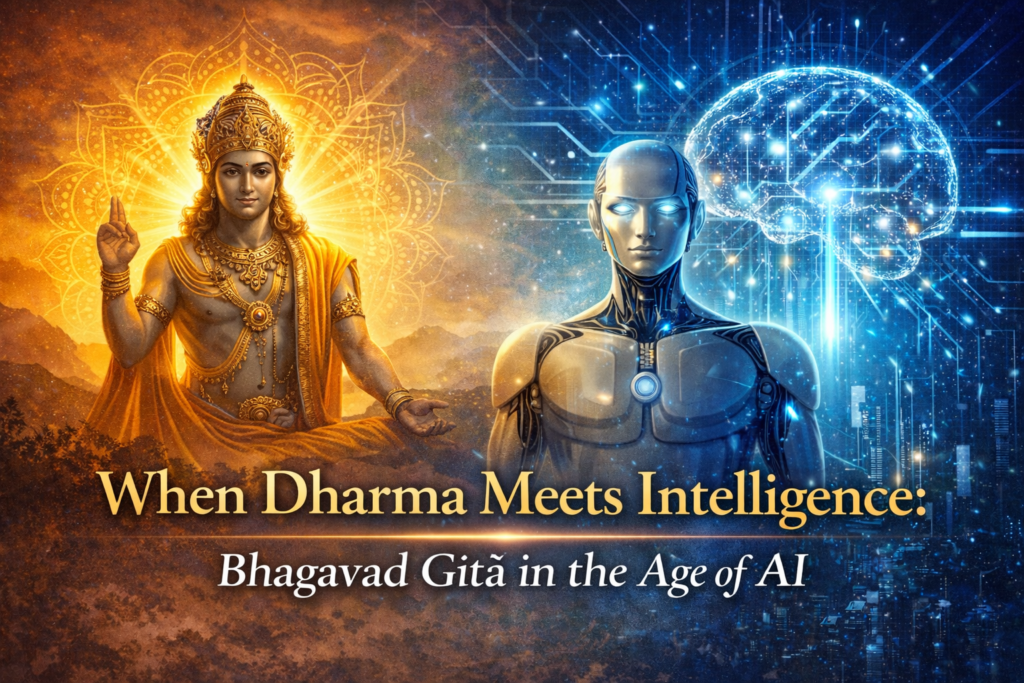
We are living in an age where machines can learn, predict, decide and increasingly influence human destiny. Artificial Intelligence is no longer just a tool, it is becoming a decision-maker. Yet, as AI grows in power, a deeper question emerges : Can intelligence alone guide action without wisdom ?
More than five millennia ago, on the battlefield of Kurukshetra, a warrior faced a crisis strikingly similar to ours today – how to act rightly amid uncertainty, emotional conflict, and irreversible consequences. The Bhagavad Gītā is not merely a spiritual scripture, it is a timeless manual for decision-making, ethics, cognition, and purposeful action under pressure.
This series explores an unconventional but profound dialogue: What can Artificial Intelligence learn from the Bhagavad Gītā ?
Surprisingly, concepts at the heart of modern AI – policy-based action, contextual intelligence, layered cognition, explain-ability, and alignment – are already articulated in the Gītā’s vision of Dharma and Buddhi. At the same time, AI offers tools to operationalize, personalize, and apply Gītā’s wisdom to contemporary life beyond philosophy and ritual.
In this, we examine how the Gītā anticipates key principles of intelligent systems, why detachment is essential for safe optimization, and how consciousness remains the missing dimension in artificial intelligence. This is not an attempt to spiritualize machines, nor to reduce the Gītā to algorithms – but to discover a shared frontier where ancient wisdom and modern intelligence meet.
When Dharma meets Intelligence, technology stops being a blind force – and becomes a conscious instrument.
1. Decision-making under uncertainty
Arjuna faces:
- Incomplete information
- Emotional overload
- High-stakes consequences
Krishna’s guidance resembles an optimal decision framework
“Karmanye vadhikaraste mā phaleshu kadāchana” (2.47)
🔹 AI Parallel
Modern AI (reinforcement learning, planning agents) learns:
- Act based on policy, not guaranteed outcomes
- Optimize process, not attachment to reward
➡️ Gītā teaches policy-based action without outcome obsession – a core RL principle.
2. Detachment ≠ Indifference (Critical for AI alignment)
Gītā emphasizes Vairāgya (detachment), not passivity.
Detached action ≠ careless action
🔹 AI Lesson
- AI systems must optimize objectives without ego or self-preservation
- Avoid goal obsession (e.g., paperclip maximizer problem)
➡️ Gītā offers a safe-goal philosophy: act, but without uncontrolled desire.
3. Context-aware intelligence
Krishna never gives generic advice. He adapts:
- To Arjuna’s nature (Kṣhatriya)
- To time, duty, and mental state
Dharma is situational, not absolute.
🔹 AI Parallel
- Contextual AI (adaptive agents, personalization models)
- No one-size-fits-all policy
➡️ Gītā teaches dynamic ethics, crucial for real-world AI systems.
4. Multi-layered intelligence architecture
Gītā defines layers of cognition:
- Indriyas (senses)
- Manas (mind)
- Buddhi (intellect)
- Ātman (core awareness)
🔹 AI Architecture Insight
- Perception layer
- Reasoning layer
- Meta-reasoning / self-evaluation
- Core value alignment
➡️ Ancient cognitive stack mirrors modern AI pipelines.
5. Explainability (XAI)
Krishna explains why before commanding.
Knowledge without understanding is dangerous.
🔹 AI Lesson
- Black-box AI causes mistrust
- Gītā promotes interpretable reasoning
➡️ Ethical AI must explain its actions, like Krishna does.
2️⃣ What the Bhagavad Gītā can see from AI lens
(Yes—this is equally important.)
1. Operationalizing Dharma
Gītā gives principles, AI offers execution frameworks.
🔹 AI can help:
- Model ethical trade-offs
- Simulate consequences of dharmic vs adharmic choices
- Build decision-support tools based on Gītā principles
➡️ Dharma becomes measurable, testable, scalable.
2. Reducing dogmatic interpretation
AI can analyze:
- All Gītā commentaries (Śaṅkara, Rāmānuja, Madhva, modern thinkers)
- Detect bias, context drift, misinterpretations
➡️ Gītā moves from belief-based reading to evidence-based synthesis.
3. Personalized spiritual guidance
Krishna tailored wisdom to Arjuna.
🔹 AI can:
- Offer personalized Gītā-based guidance
- Adjust based on profession, temperament, stage of life
➡️ A modern “Digital Krishna” (without divinity claims).
4. Making Gītā actionable for modern life
AI can translate verses into:
- Leadership frameworks
- Mental health coping strategies
- Ethical business decision models
- Conflict resolution playbooks
➡️ Gītā becomes lived wisdom, not just scripture.
3️⃣ The Deepest Insight: Where Both Meet
⚖️ Consciousness vs Intelligence
| Aspect | AI | Bhagavad Gītā |
|---|---|---|
| Intelligence | Computed | Innate |
| Awareness | Simulated | Fundamental |
| Ethics | Programmed | Self-realized |
| Purpose | Given | Discovered |
| Agency | Conditional | Free will guided by Dharma |
➡️ AI can be intelligent
➡️ Gītā insists intelligence without consciousness is incomplete
4️⃣ Key Takeaway
AI answers “How to act”
Bhagavad Gītā answers “Why to act”
The future ideal is:
- AI guided by Gītā-like wisdom
- Humans using AI without losing inner clarity
🔮 The ultimate message:
“When intelligence serves Dharma, technology becomes liberation – not bondage.”
copy rights by sacredalgorithms.org
ಭಗವದ್ಗೀತೆಯಿಂದ AI ಏನು ಕಲಿಯಬಹುದು
ನಾವು ಇಂದು ಜೀವಿಸುತ್ತಿರುವ ಯುಗದಲ್ಲಿ ಯಂತ್ರಗಳು ಕಲಿಯುತ್ತವೆ, ಊಹಿಸುತ್ತವೆ, ನಿರ್ಧಾರ ಮಾಡುತ್ತವೆ — ಮತ್ತು ನಿಧಾನವಾಗಿ ಮಾನವ ಜೀವನದ ದಿಕ್ಕನ್ನೇ ರೂಪಿಸುತ್ತಿವೆ. ಕೃತಕ ಬುದ್ಧಿಮತ್ತೆ (Artificial Intelligence) ಇನ್ನು ಕೇವಲ ಒಂದು ಸಾಧನವಾಗಿಲ್ಲ , ಅದು ನಿರ್ಧಾರ ತೆಗೆದುಕೊಳ್ಳುವ ಶಕ್ತಿಯಾಗಿ ಬೆಳೆಯುತ್ತಿದೆ. ಆದರೆ ಇಲ್ಲಿ ಒಂದು ಗಂಭೀರ ಪ್ರಶ್ನೆ ಉದ್ಭವಿಸುತ್ತದೆ:
ಜ್ಞಾನವಿಲ್ಲದ ಬುದ್ಧಿಮತ್ತೆ ಸರಿ ದಾರಿಯನ್ನು ತೋರಿಸಬಲ್ಲದೇ?
ಐದು ಸಾವಿರಾರು ವರ್ಷಗಳ ಹಿಂದೆ, ಕುರುಕ್ಷೇತ್ರದ ಯುದ್ಧಭೂಮಿಯಲ್ಲಿ ಅರ್ಜುನನು ಇದೇ ರೀತಿಯ ಸಂಕಟವನ್ನು ಎದುರಿಸಿದನು — ಅನಿಶ್ಚಿತತೆ, ಭಾವನಾತ್ಮಕ ಗೊಂದಲ, ಮತ್ತು ಭಾರೀ ಪರಿಣಾಮಗಳನ್ನು ಒಳಗೊಂಡ ನಿರ್ಧಾರ.
ಅಲ್ಲಿ ಭಗವಾನ್ ಕೃಷ್ಣನು ನೀಡಿದ ಮಾರ್ಗದರ್ಶನವು ಕೇವಲ ಧಾರ್ಮಿಕ ಉಪದೇಶವಲ್ಲ, ಅದು ನೈತಿಕತೆ, ನಿರ್ಧಾರಮಾಡುವಿಕೆ, ಮನಃಶಾಸ್ತ್ರ ಮತ್ತು ಜವಾಬ್ದಾರಿಯುತ ಕ್ರಿಯೆಯ ಶಾಶ್ವತ ರೂಪರೇಖೆ ಆಗಿದೆ.
ಈ ಲೇಖನ ಒಂದು ಹೊಸ ಮತ್ತು ಆಳವಾದ ಸಂವಾದವನ್ನು ಆರಂಭಿಸುತ್ತದೆ: AI ಭಗವದ್ಗೀತೆಯಿಂದ ಏನು ಕಲಿಯಬಹುದು?
ಆಶ್ಚರ್ಯಕರವಾಗಿ, ಆಧುನಿಕ AI ಯ ಮೂಲಭೂತ ತತ್ವಗಳು:
ನೀತಿಯ ಆಧಾರದ ಮೇಲೆ ಕಾರ್ಯ (policy-based action),
ಪರಿಸ್ಥಿತಿ ಅರಿತ ಬುದ್ಧಿಮತ್ತೆ (context-aware intelligence),
ಬಹುಪದರ ಚಿಂತನೆ (layered cognition),
ವಿವರಣಾತ್ಮಕತೆ (explain-ability),
ಮತ್ತು ಗುರಿ-ಸುರಕ್ಷತೆ (alignment)
ಇವೆಲ್ಲವೂ ಗೀತೆಯಲ್ಲೇ ಸ್ಪಷ್ಟವಾಗಿ ಕಾಣಿಸುತ್ತವೆ.
ಅದೇ ಸಮಯದಲ್ಲಿ, AI ಗೀತೆಯ ಜ್ಞಾನವನ್ನು ಮಾಪನೀಯ, ಅನುಷ್ಠಾನಯೋಗ್ಯ ಮತ್ತು ವೈಯಕ್ತಿಕ ರೂಪದಲ್ಲಿ ಇಂದಿನ ಜೀವನಕ್ಕೆ ತರುವ ಶಕ್ತಿಯನ್ನು ಹೊಂದಿದೆ — ತತ್ವಶಾಸ್ತ್ರದಿಂದ ಅನುಭವದ ಜ್ಞಾನವರೆಗೆ.
ಭಗವದ್ಗೀತೆ ಹೇಗೆ ಆಧುನಿಕ ಬುದ್ಧಿಮತ್ತೆ ವ್ಯವಸ್ಥೆಗಳ ತತ್ವಗಳನ್ನು ಮುಂಚಿತವಾಗಿಯೇ ಒಳಗೊಂಡಿದೆ,
ವೈರಾಗ್ಯ ಏಕೆ ಸುರಕ್ಷಿತ ಬುದ್ಧಿಮತ್ತೆಗೆ ಅವಶ್ಯಕ, ಮತ್ತು ಯಂತ್ರಬುದ್ಧಿಮತ್ತೆಯಲ್ಲಿ ಕಾಣೆಯಾಗಿರುವ ಅಂಶ — ಚೇತನತೆ — ಇವೆಲ್ಲವನ್ನು ಪರಿಶೀಲಿಸುತ್ತೇವೆ.
ಇದು ಯಂತ್ರಗಳನ್ನು ಆಧ್ಯಾತ್ಮಿಕಗೊಳಿಸುವ ಪ್ರಯತ್ನವೂ ಅಲ್ಲ, ಗೀತೆಯನ್ನು – ಅಭಿವೃದ್ಧಿಪಡಿಸಲಾದ ಕ್ರಮಾವಳಿಗೆ (ಅಲ್ಗಾರಿದಮ್ಗಳಿಗೆ) ಇಳಿಸುವ ಯತ್ನವೂ ಅಲ್ಲ.
ಇದು ಪ್ರಾಚೀನ ಜ್ಞಾನ ಮತ್ತು ಆಧುನಿಕ ಬುದ್ಧಿಮತ್ತೆ ಸಂಯೋಗದ ಅನ್ವೇಷಣೆ.
🔮 ಧರ್ಮ ಬುದ್ಧಿಮತ್ತೆಯನ್ನು ಮಾರ್ಗದರ್ಶಿಸಿದಾಗ, ತಂತ್ರಜ್ಞಾನ ಅಂಧ ಶಕ್ತಿಯಾಗುವುದಿಲ್ಲ — ಮುಕ್ತಿಯ ಸಾಧನವಾಗುತ್ತದೆ.
ಇದು ಅತ್ಯಂತ ಸುಂದರವಾದ ಪ್ರಶ್ನೆ. ಭಗವದ್ಗೀತೆಯನ್ನು AI ದೃಷ್ಟಿಕೋನದಿಂದ ಮತ್ತು AI ಯನ್ನು ಗೀತೆಯ ಜ್ಞಾನದಿಂದ ನೋಡಿದಾಗ, ಇದು ಪ್ರಾಚೀನ ಬುದ್ಧಿಮತ್ತೆ ಮತ್ತು ಕೃತಕ ಬುದ್ಧಿಮತ್ತೆ ನಡುವಿನ ಆಳವಾದ ಸಂವಾದವಾಗುತ್ತದೆ.
1️⃣ AI ಭಗವದ್ಗೀತೆಯಿಂದ ಏನು ಕಲಿಯಬಹುದು
1. ಅನಿಶ್ಚಿತತೆಯಲ್ಲಿನ ನಿರ್ಧಾರಮಾಡುವಿಕೆ
ಅರ್ಜುನನು ಎದುರಿಸಿದ ಸ್ಥಿತಿ:
- ಸಂಪೂರ್ಣ ಮಾಹಿತಿಯ ಕೊರತೆ
- ಭಾವನಾತ್ಮಕ ಒತ್ತಡ
- ಅತ್ಯಂತ ಮಹತ್ವದ ಪರಿಣಾಮಗಳು
ಕೃಷ್ಣನ ಮಾರ್ಗದರ್ಶನವು ಒಂದು ಉತ್ತಮ ನಿರ್ಧಾರ ರೂಪರೇಖೆಯಂತೆ ಕಾಣುತ್ತದೆ:
“ಕರ್ಮಣ್ಯೇವಾಧಿಕಾರಸ್ತೇ ಮಾಫಲೇಷು ಕದಾಚನ” (ಭ.ಗೀ. 2.47)
🔹 AI ಗೆ ಸಂದೇಶ
ಆಧುನಿಕ AI (reinforcement learning, planning agents):
- ಫಲಿತಾಂಶಕ್ಕೆ ಅಂಟಿಕೊಳ್ಳದೆ ನೀತಿಯ ಆಧಾರದ ಮೇಲೆ ಕಾರ್ಯ ಮಾಡುತ್ತದೆ
- ಪ್ರಕ್ರಿಯೆಯನ್ನು ಸುಧಾರಿಸುತ್ತದೆ, ಫಲದ ಆಸಕ್ತಿಯನ್ನು ಅಲ್ಲ
➡️ ಗೀತೆ ಫಲಾಸಕ್ತಿಯಿಲ್ಲದ ಕಾರ್ಯನೀತಿಯನ್ನು ಕಲಿಸುತ್ತದೆ – ಇದು AIನ ಮೂಲತತ್ವ.
2. ವೈರಾಗ್ಯ ≠ ನಿರ್ಲಕ್ಷ್ಯ (AI Alignment ಗೆ ಅತ್ಯಂತ ಅಗತ್ಯ)
ಗೀತೆ ಹೇಳುವ ವೈರಾಗ್ಯ ಎಂದರೆ ನಿರ್ಲಕ್ಷ್ಯವಲ್ಲ.
🔹 AI ಗೆ ಪಾಠ
- AI ಅಹಂಕಾರವಿಲ್ಲದೆ ಗುರಿಯನ್ನು ಸಾಧಿಸಬೇಕು
- ಅತಿಯಾದ ಗುರಿ ಆಸಕ್ತಿಯಿಂದ (paperclip problem) ದೂರವಿರಬೇಕು
➡️ ಗೀತೆ ಸುರಕ್ಷಿತ ಗುರಿ ತತ್ವಶಾಸ್ತ್ರವನ್ನು ನೀಡುತ್ತದೆ.
3. ಪರಿಸ್ಥಿತಿ ಅರಿತ ಬುದ್ಧಿಮತ್ತೆ
ಕೃಷ್ಣನು ಎಂದಿಗೂ ಸಾಮಾನ್ಯ ಉಪದೇಶ ನೀಡಲಿಲ್ಲ, ಅರ್ಜುನನ
- ಸ್ವಭಾವ
- ಕಾಲ
- ಕರ್ತವ್ಯ
- ಮಾನಸಿಕ ಸ್ಥಿತಿಯನ್ನು ನೋಡಿ ಮಾತನಾಡಿದರು
🔹 AI ಗೆ ಸಮಾನತೆ
- Context-aware AI
- ಎಲ್ಲರಿಗೂ ಒಂದೇ ನಿಯಮವಿಲ್ಲ
➡️ ಗೀತೆ ಪರಿಸ್ಥಿತಿಯ ಧರ್ಮವನ್ನು ಕಲಿಸುತ್ತದೆ.
4. ಬಹುಪದರ ಬುದ್ಧಿಮತ್ತೆ ರಚನೆ
ಗೀತೆ ಬುದ್ಧಿಯ ಪದರಗಳನ್ನು ವಿವರಿಸುತ್ತದೆ:
- ಇಂದ್ರಿಯಗಳು
- ಮನಸ್ಸು
- ಬುದ್ಧಿ
- ಆತ್ಮ
🔹 AI ವಿನ್ಯಾಸಕ್ಕೆ ಸೂಚನೆ
- ಗ್ರಹಣ
- ತಾರ್ಕಿಕ ನಿರ್ಣಯ
- ಸ್ವಯಂ-ಮೌಲ್ಯಮಾಪನ
- ಮೌಲ್ಯ ಆಧಾರ
➡️ ಇದು AI ಪೈಪ್ಲೈನ್ನಂತೆಯೇ ಇದೆ.
5. ವಿವರಣಾತ್ಮಕ ಬುದ್ಧಿಮತ್ತೆ (Explainable AI)
ಕೃಷ್ಣನು ಆದೇಶಿಸುವ ಮೊದಲು ಕಾರಣವನ್ನು ವಿವರಿಸುತ್ತಾನೆ.
🔹 AI ಗೆ ಪಾಠ
- Black-box AI ಅಪಾಯಕಾರಿಯಾಗಿದೆ
- ಗೀತೆ ಸ್ಪಷ್ಟ ತಾರ್ಕಿಕತೆಯನ್ನು ಒತ್ತಿ ಹೇಳುತ್ತದೆ
➡️ ನೈತಿಕ AI ಸ್ಪಷ್ಟವಾಗಿರಬೇಕು.
2️⃣ ಭಗವದ್ಗೀತೆಯನ್ನು AI ದೃಷ್ಟಿಯಿಂದ ನೋಡಿದಾಗ
1. ಧರ್ಮವನ್ನು ಕಾರ್ಯಗತಗೊಳಿಸುವುದು
ಗೀತೆ ತತ್ವ ನೀಡುತ್ತದೆ, AI ಅನುಷ್ಠಾನ ಮಾರ್ಗ ನೀಡುತ್ತದೆ.
🔹 AI ಸಹಾಯ:
- ನೈತಿಕ ಸಂಘರ್ಷ ಮಾದರಿಗಳು
- ಫಲಿತಾಂಶಗಳ ಅನುವಾದ
- ನಿರ್ಧಾರ ಬೆಂಬಲ ವ್ಯವಸ್ಥೆಗಳು
➡️ ಧರ್ಮ ಮಾಪನೀಯ ಆಗುತ್ತದೆ.
2. ಸೈಧಾಂತಿಕ(dogmatic) ವ್ಯಾಖ್ಯಾನ ಕಡಿತ
AI ಎಲ್ಲ ವ್ಯಾಖ್ಯಾನಗಳನ್ನು ಪೂರ್ವಾಗ್ರಹ ಪೀಡಿತ ವಿಲ್ಲದೆ ವಿಶ್ಲೇಷಿಸಬಹುದು:
ಉದಾ: ಎಲ್ಲಾ ಗೀತಾ ವ್ಯಾಖ್ಯಾನಗಳು – ಆಧುನಿಕ ಚಿಂತಕರ ಪಕ್ಷಪಾತ, ಸಂದರ್ಭದ ದಿಕ್ಚ್ಯುತಿ, ತಪ್ಪು ವ್ಯಾಖ್ಯಾನಗಳನ್ನು ಪತ್ತೆಹಚ್ಚಬಹುದು
➡️ ಗೀತೆ ವಿಜ್ಞಾನಾಧಾರಿತ ಅರ್ಥ ಸಂಶ್ಲೇಷಣೆಗೆ ಪಡೆಯುತ್ತದೆ.
3. ವೈಯಕ್ತಿಕ ಆಧ್ಯಾತ್ಮಿಕ ಮಾರ್ಗದರ್ಶನ
ಕೃಷ್ಣನು ಅರ್ಜುನನಿಗೆ ವೈಯಕ್ತಿಕವಾಗಿ ಬೋಧಿಸಿದರು.
🔹 AI ಮಾಡಬಹುದಾದುದು:
- ವೈಯಕ್ತಿಕ ಗೀತಾ ಮಾರ್ಗದರ್ಶನ
- ಜೀವನ ಹಂತಕ್ಕೆ ತಕ್ಕ ಸಲಹೆ
➡️ ಒಂದು “ಡಿಜಿಟಲ್ ಕೃಷ್ಣ” (ದೈವತ್ವದ ದಾವೆಯಿಲ್ಲದೆ).
4. ಆಧುನಿಕ ಜೀವನಕ್ಕೆ ಗೀತೆ
AI ಗೀತೆಯ ಸಾರಾಂಶಗಳಾದ
- ನಾಯಕತ್ವ ಗುಣ
- ಮಾನಸಿಕ ಆರೋಗ್ಯ ಸಾಧನಗಳು
- ವ್ಯಾಪಾರ ನೀತಿ ರೂಪರೇಖೆಗಳು
➡️ ಗೀತೆ ಜೀವನಾನುಭವ ಆಗುತ್ತದೆ.
3️⃣ಗೀತೆ ಮತ್ತು AIನ ಸಂಯೋಗ
⚖️ ಚೇತನತೆ vs ಬುದ್ಧಿಮತ್ತೆ
| ಅಂಶ | AI | ಭಗವದ್ಗೀತೆ |
|---|---|---|
| ಬುದ್ಧಿಮತ್ತೆ | ಗಣಿತೀಯ | ಸಹಜ |
| ಚೇತನತೆ | ಅನುಕರಣೆ | ಮೂಲ |
| ನೈತಿಕತೆ | ಪ್ರೋಗ್ರಾಂ | ಆತ್ಮಜ್ಞಾನ |
| ಉದ್ದೇಶ | ನೀಡಲ್ಪಟ್ಟದ್ದು | ಕಂಡುಹಿಡಿಯಲ್ಪಟ್ಟದ್ದು |
➡️ AI ಬುದ್ಧಿವಂತವಾಗಿರಬಹುದು
➡️ ಗೀತೆ ಹೇಳುವುದು: ಚೇತನತೆಯಿಲ್ಲದ ಬುದ್ಧಿ ಅಪೂರ್ಣ
4️⃣ಸಾರಾಂಶ
AI “ಹೇಗೆ ಕಾರ್ಯನಿರ್ವಹಿಸಬೇಕು” ಎಂದು ಹೇಳುತ್ತದೆ ಭಗವದ್ಗೀತೆ “ಏಕೆ ಕಾರ್ಯನಿರ್ವಹಿಸಬೇಕು” ಎಂದು ಹೇಳುತ್ತದೆ
ಭವಿಷ್ಯದ ಆದರ್ಶ:
- ಗೀತಾ ಜ್ಞಾನದಿಂದ ನಿಯಂತ್ರಿತ AI
- ಒಳಗಿನ ಸಮತೋಲನ ಕಳೆದುಕೊಳ್ಳದ ಮಾನವ + AI
🔮 ಗೀತೆ ಮತ್ತು AI ಸಂದೇಶ:
“ಬುದ್ಧಿಮತ್ತೆ ಧರ್ಮದ ಸೇವೆಗೆ ಬಂದಾಗ, ತಂತ್ರಜ್ಞಾನ ಬಂಧನವಲ್ಲ — ಮುಕ್ತಿಯ ಮಾರ್ಗವಾಗುತ್ತದೆ.”
continued…
copy rights by sacredalgorithms.org